Most organizations have deployed AI. Few have developed the maturity to support it.
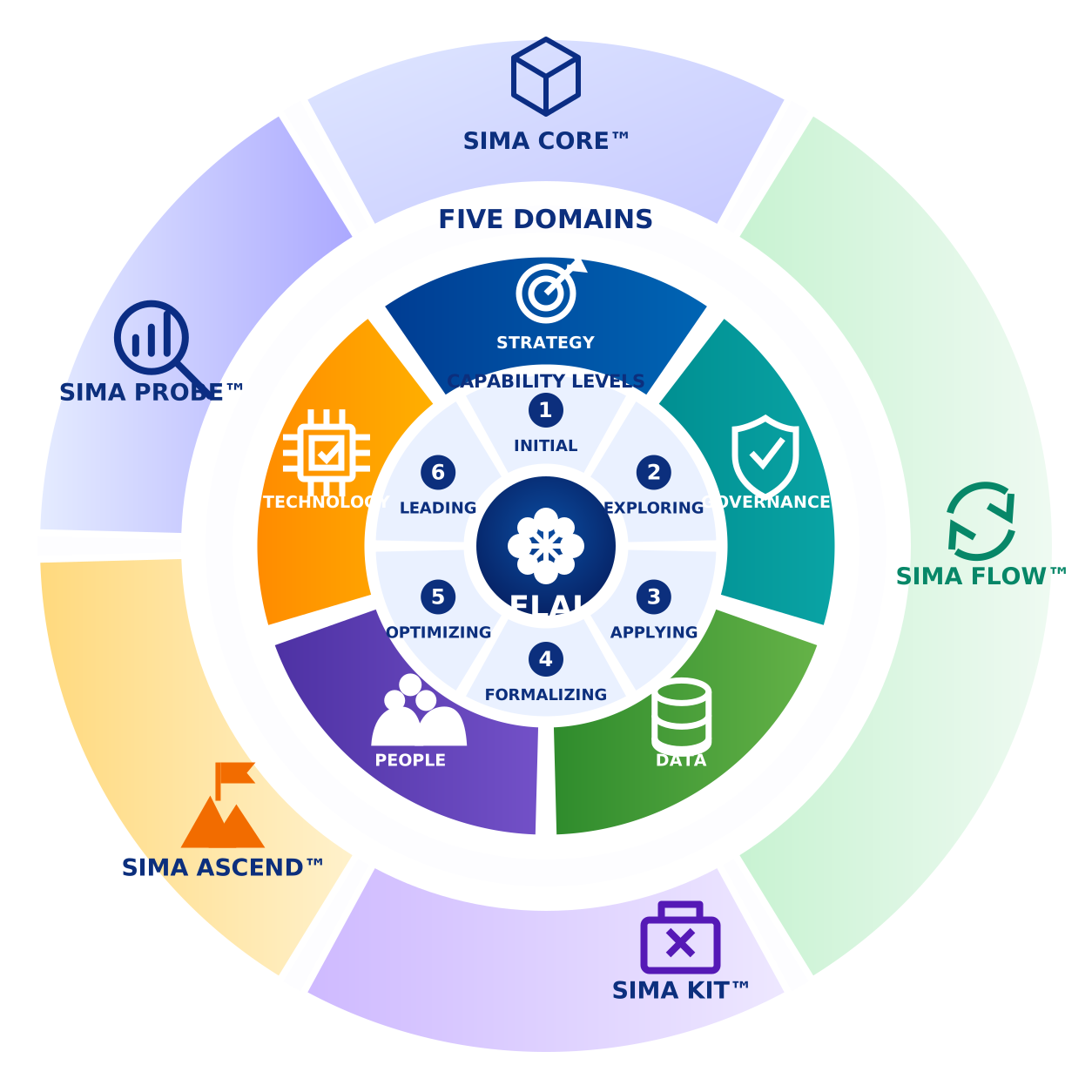
AI increases what an organization can do — and scales whatever inconsistency already exists inside it. Left unmanaged, it doesn't fix weak decisions; it makes them louder. Whether that activity turns into reliable outcomes is determined by organizational maturity, not the technology. SIMA360 exists to diagnose and build that maturity, across the five perspectives and six Maturity Levels established in the book.
Interactive Framework Map
The SIMA360™ Operating Architecture
Five integrated components. Five organizational perspectives. Six maturity levels. One structured path to AI maturity.
Framework Components
AI Perspectives
Explore and register for training at SIMA360Classes.eventbee.com
Learn MoreFive Components. One Integrated System.
SIMA360 is not a collection of independent tools. It is a structured ecosystem where each component plays a specific role and connects to the others in a defined sequence.
SIMA-Core defines the framework's vocabulary: the five perspectives, six maturity levels, and tool categories that every other component operates within. SIMA-Probe applies that vocabulary diagnostically, measuring where the organization actually stands across all five perspectives. SIMA-Flow provides the improvement cycle architecture — the structured process for moving from current state to target state through disciplined, evidence-based iterations. SIMA-Kit supplies the level-specific guidance — entrance criteria, goals, strategies, exit criteria — those cycles require at every Maturity Level. SIMA-Ascend builds the practitioner capability organizations need to run the system consistently and advance it over time.
Why It's Built This Way
Diagnostic first, not prescriptive first — activity and improvement aren't the same thing.
Starts Where You Actually Are
Capability is what a system can do. Maturity is whether the organization can handle what it's doing. SIMA360 measures the second one first — five perspectives, six Maturity Levels — so improvement is grounded in evidence, not assumption.
No Single Point of Control
AI touches strategy, governance, data, people, and technology at once — not one part of the organization in isolation. A model can be flawless and still fail if nobody defined which decisions it's allowed to influence, so SIMA360 tracks all five perspectives independently: the weakest one determines whether the system holds up.
Improves Through Disciplined Cycles
Maturity isn't earned in one deployment decision. It's built through repeated, evidence-based cycles of assessment and adjustment — the same discipline SIMA360 runs at every Maturity Level, so growth is earned one step at a time rather than assumed.
Built on Research. Designed for Practice.
SIMA360 is grounded in the research and maturity architecture established in The AI Rush: Too Much. Too Soon. by Dr. Charles Suscheck. The framework's five perspectives, six maturity levels, and improvement cycle design come directly from that foundation — not from consulting convention.
The distinction matters. Most AI adoption frameworks are prescriptive — they tell you what to do. SIMA360 is diagnostic first: it measures where you actually are, then structures how you advance. The result is a system that works regardless of industry, technology stack, or current maturity level.
Who it's for
- Leaders who need to move from AI experimentation to organizational capability
- Governance and compliance teams navigating AI risk without adequate structure
- Practitioners tasked with building repeatable AI capability, not just running projects
- Organizations that have deployed AI but aren't producing reliable outcomes from it
Know Where You Stand. Advance Deliberately.
Start with an assessment or explore the framework. Both paths lead to the same place: a clear picture of your current AI maturity and a structured way to improve it.